Bring order to thousand-page infrastructure tenders.
Altura is the bid management platform built for infrastructure tender teams. It brings your documents, requirements, risks and people into one structured workspace, so you can run long, complex, multi-stakeholder tenders from intake to submission and win more of them.
"With Altura, we save 16 hours per tender on document analysis and summarisation, that's two full working days. Employees can now use that time for other valuable tasks."

The reality for infrastructure bid teams today.
Detail lost in the chaos
Senior people spend their time chasing reminders and approvals, internally and from subcontractors, rather than shaping the bid.
Collaboration lacks structure
Senior people spend their time chasing reminders and approvals, internally and from subcontractors, rather than shaping the bid.
Risk buried in long tenders
An infrastructure tender easily runs past a thousand pages, and missing a single requirement can carry major consequences.
How Altura helps infrastructure bid teams at every stage of the bid.
Altura brings all your bid management workflows together in one place. Stay organized, do more with less effort, and gain valuable data insights into your tenders and RFPs.
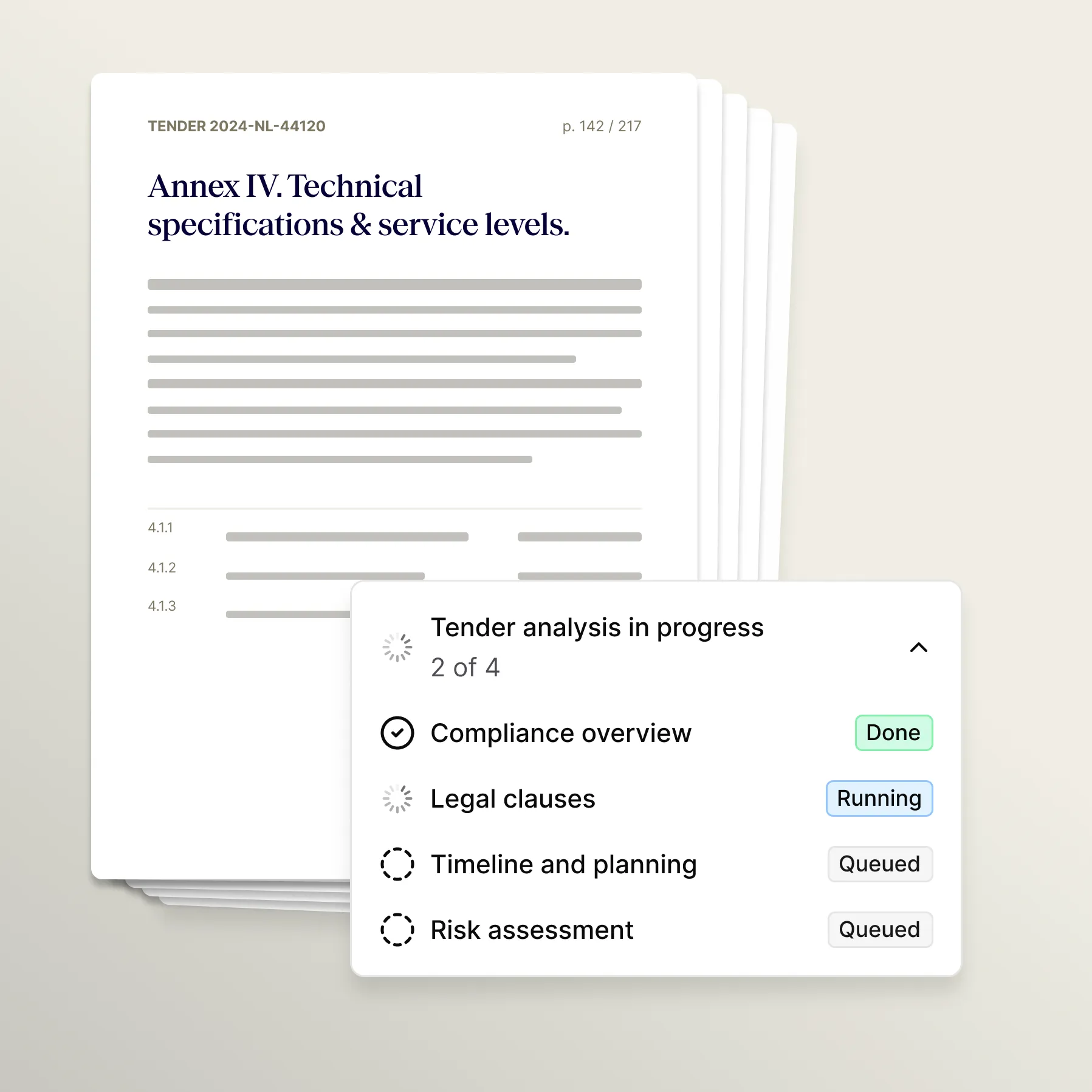
Make the bid call on a thousand-page infrastructure tender, on day one.
An infrastructure tender can run well past a thousand pages, and the go/no-go call is due long before the team has read it all. Altura analyses every document against the standards you set, and surfaces the requirements, risks and win factors that decide the bid. Each finding links to the clause it came from, so you commit on evidence.
→ Analyses every document in your tender pack.
→ Instantly identifies go/no-go criteria and critical win factors.
→ Maintains full traceability to the source document.
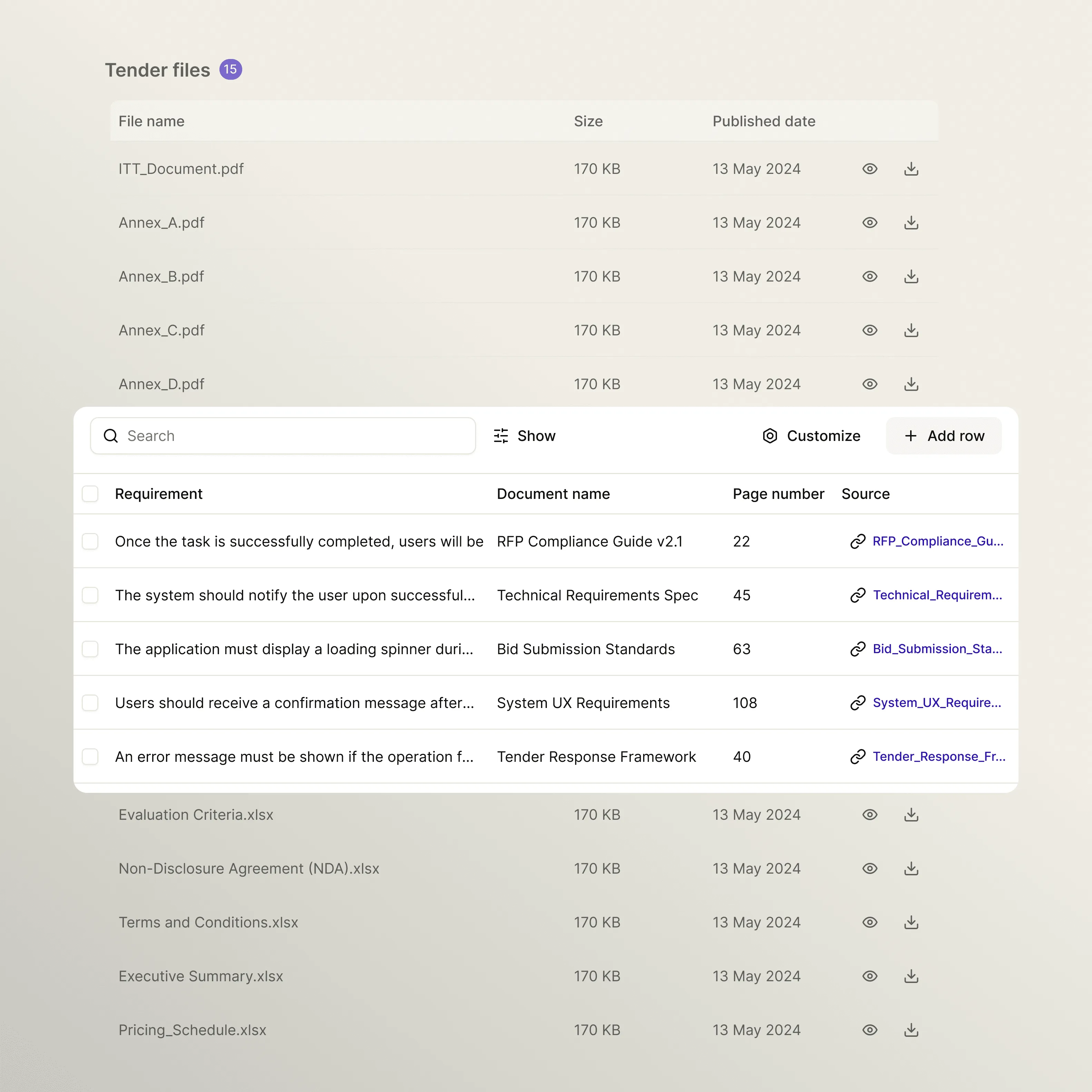
Turn the infrastructure tender into a clear requirements list, answers already drafted.
Altura pulls every requirement out of the tender pack, categorises it, and weighs each one against your track record, certifications and past projects. Draft responses come straight from your own bid knowledge, so your team starts each answer with the right evidence rather than a blank page.
→ Linked source referenced for every requirement.
→ Compliance status with reasoning for every line.
→ Draft responses pulled from your verified Knowledge Library.
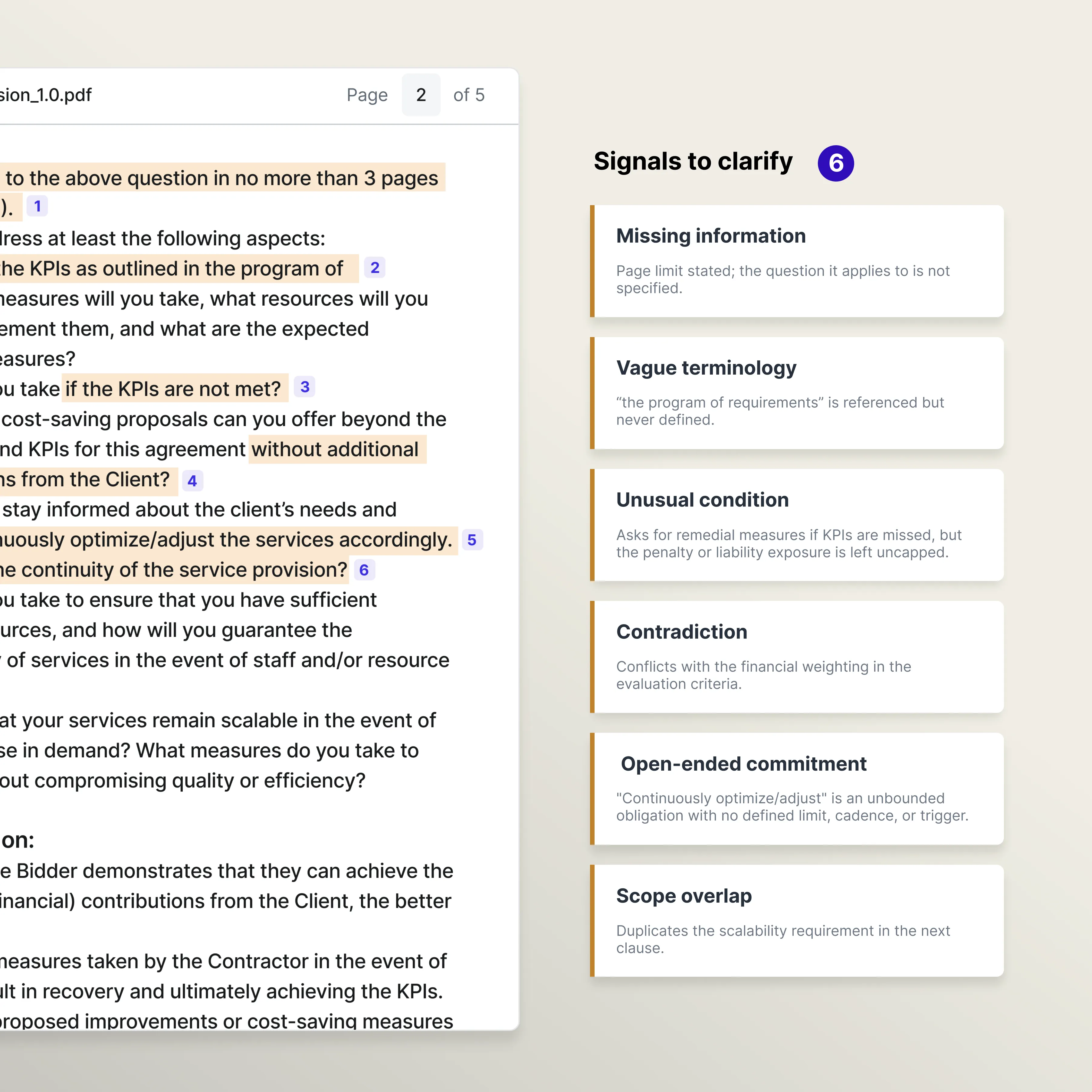
Spot what to clarify in an infrastructure tender, and how to play it.
Altura scans your tender and Bid Book for the gaps, contradictions and vague clauses that need clarifying, early enough to act on them. It drafts professional clarification questions with the reasoning behind each, and a recommended strategy for your position. When answers come back, re-run the affected workflows so requirements, risks and compliance update with the new information.
→ Workflow-driven scanning tailored to your specific bid criteria.
→ Full reasoning and origin provided for every generated question.
→ Recommended strategy attached for every draft question.
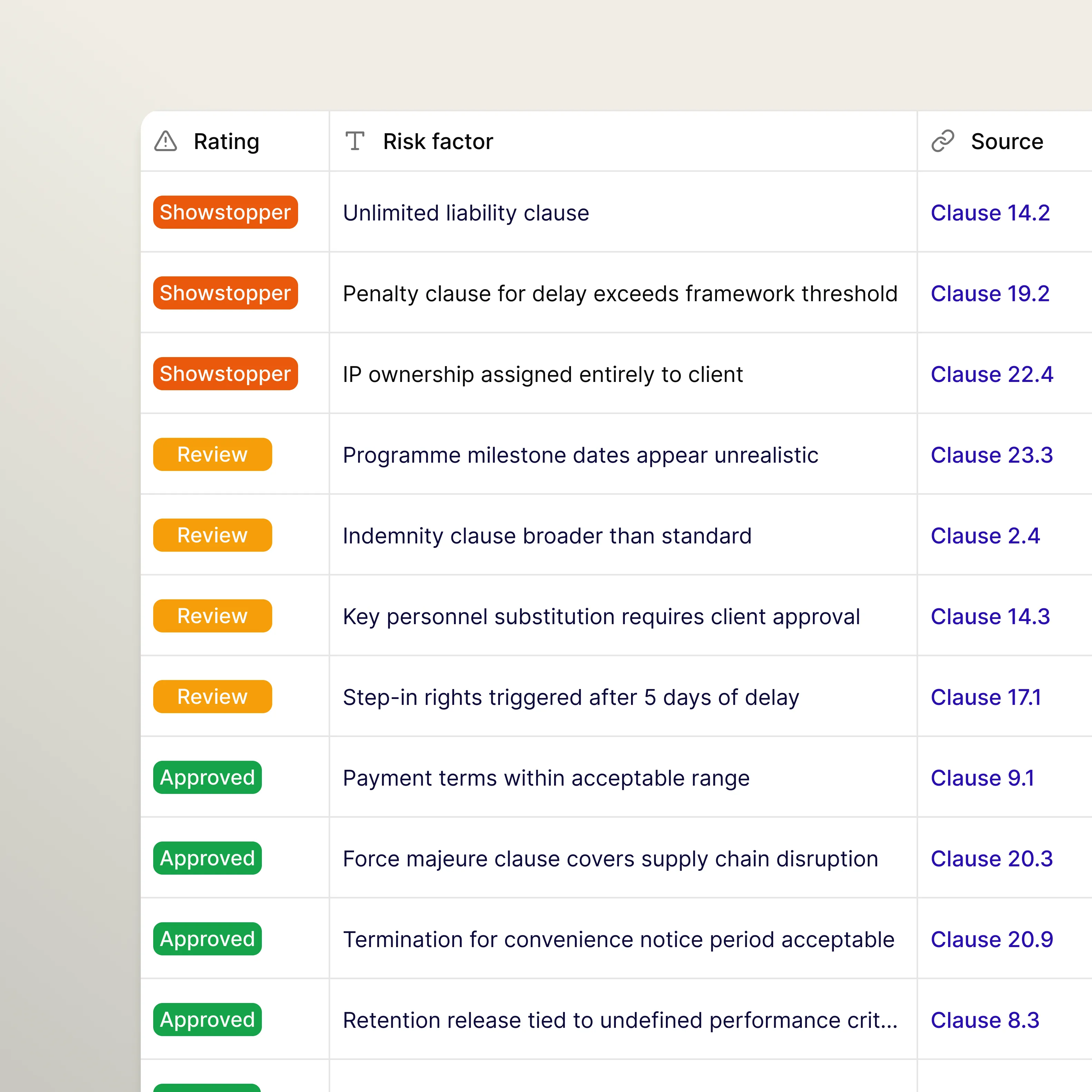
Catch the risky clause in an infrastructure contract before you sign up to it.
Infrastructure contracts hide the costly clauses: uncapped liability, penalty terms, tight programme dates, demanding technical conditions. Altura checks every clause against your risk framework, flags the ones that breach your thresholds, and links each flag to the exact source text. Mitigation suggestions are drawn from how you have handled similar bids before.
→ Risk detection tailored to your specific criteria.
→ Direct links to the exact source clause for every flag.
→ Mitigation suggestions drawn from your past bids.
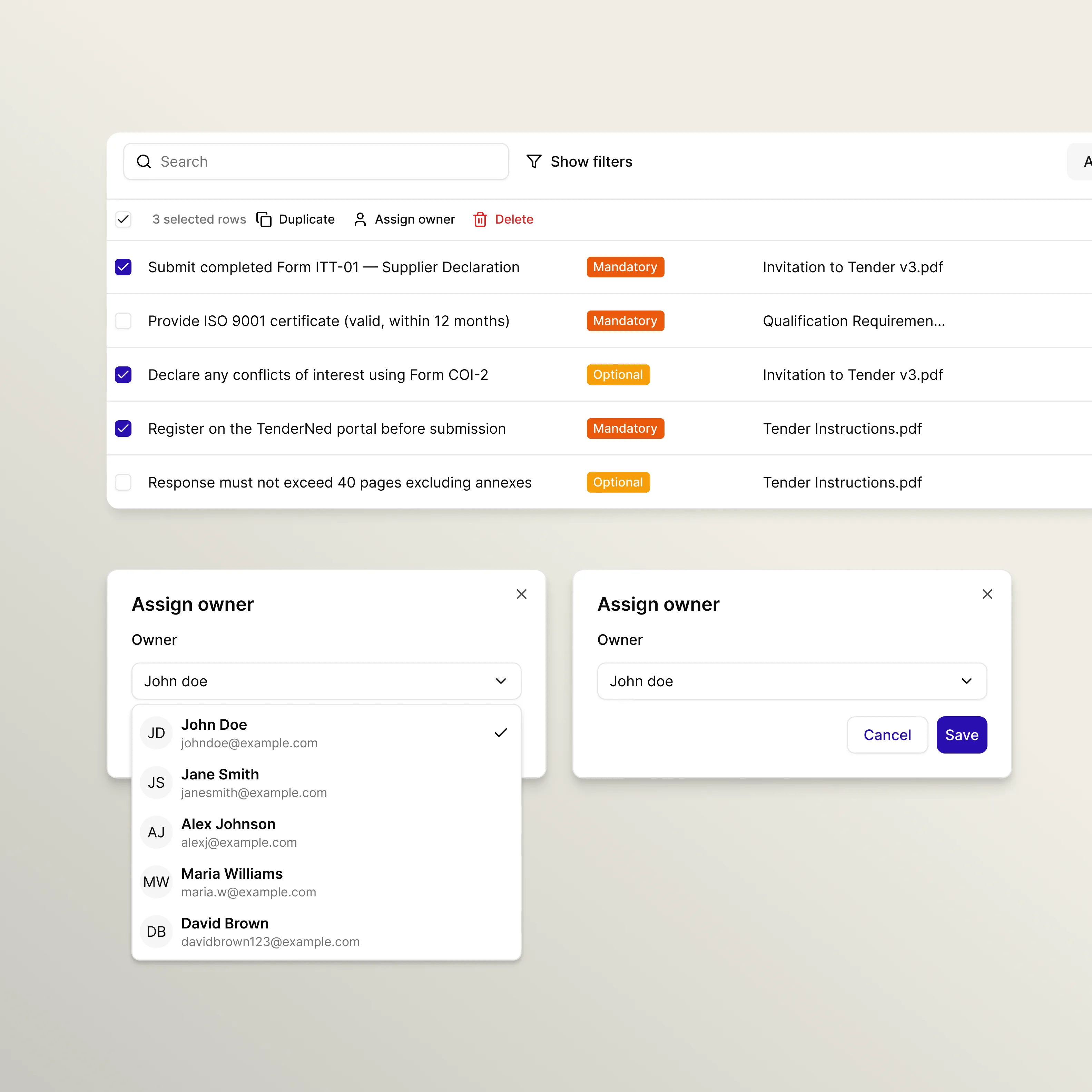
Every submission requirement on an infrastructure tender, tracked from extraction to ready.
Infrastructure tenders bury the submission rules across annexes: required forms, certificates, declarations, formatting, page limits, signatures. Altura extracts each one and, where it can, checks it against your project documents and Knowledge Library. Procedural items are flagged for manual review, and you can re-run the check at any point to see exactly where the submission stands.
→ Every submission requirement extracted and categorised.
→ Clear readiness status with reasoning for each item.
→ Procedural and formatting items flagged for manual verification.
Bid teams carry more responsibility than most companies realise.
See how Altura gives your team the tools and structure to match it.

Frequently asked questions
Infrastructure tender management software gives bid teams one place to handle long, technical tenders: centralising documents, structuring requirements, assessing risk and tracking compliance. Rather than working across inboxes, message threads and loose attachments, your team runs every infrastructure bid from one workspace, which makes complex, multi-stakeholder tenders easier to run and win.
Altura runs the full infrastructure bid cycle through five connected workflows: Tender Analysis, Requirement Analysis, Clarification Questions, Risk Analysis and Submission Readiness. They work from one shared workspace and stay in sync, so your team moves from tender intake to submission without switching tools, and every requirement, risk and clarification traces back to its source document.
Yes. Altura's Tender Analysis workflow reads a thousand-page infrastructure tender against your standards and surfaces requirements, risks and go/no-go criteria in minutes. That turns days of manual reading and cross-referencing into a fast, evidence-based bid/no-bid decision.
Altura's Risk Analysis workflow checks every clause against your risk framework and flags terms that breach your thresholds, such as uncapped liability, penalties, tight programme dates and demanding technical conditions. Each flag links to the source text, with mitigation drawn from your past infrastructure bids.
Altura is built for long, complex, multi-stakeholder bids, not single tasks. Its five connected workflows (Tender Analysis, Requirement Analysis, Clarification Questions, Risk Analysis and Submission Readiness) cover the bid from intake to submission in one workspace, stay in sync as the tender changes, and keep every finding traced to its source.